One Year Bible Challenge, Week 6

Week 6
February 5 to 11, 2011[1. The notes, summaries and points on this page are intended as bookmarks of important matters which are covered in this week’s readings. They are not intended as complete summaries of readings. Please forgive me if some of my summaries are not 100% on point. Read the manual–i.e. Bible–so that you will get a more clear understanding of the material. Thank you.
–Tom Truex]
This is the “One Year Bible Challenge:” to read the entire Bible in one year. Assuming a normal reading level, this can be done by spending about 10-15 minutes per day, each and every day. See ReadTheWholeBible.COM for more information. If you would like details so you can join us, or if you have any other questions, please call Tom Truex. Or send an email by using the CONTACT form on K-Line.ORG.
Themes and stories: God gives Moses more laws. Some of the laws deal with stealing, carelessness or damaging the property of another. Then there’s the rule about having to to pay the bride-price for enticing a virgin who is not betrothed, to have sex with you. The bride price is paid to the father. Sounds like an odd rule by today’s standards. You might even be inclined to object on the ground that the woman is dealt with as little more than property. But consider the position of the virgin who had been “enticed.” Her chances of being married to another, were now greatly diminished, and society held no place for a single woman. Adam Clarke says:
This was an exceedingly wise and humane law, and must have operated powerfully against seduction and fornication; because the person who might feel inclined to take the advantage of a young woman knew that he must marry her, and give her a dowry, if her parents consented; and if they did not consent that their daughter should wed her seducer, in this case he was obliged to give her the full dowry which could have been demanded had she been still a virgin.
God gives laws letting the land rest every seven years. God instructs the Israelites to maintain three annual feasts: Feast of the Unleavened Bread, Feast of Harvest; and Feast of Ingathering. The Israelites promised to follow all of God’s laws.
Moses went up the mountain for forty days and forty nights. God told Moses about offerings for the Sanctuary. God describes the construction of the Ark. The Ark was a chest, overlaid with gold, in which the two tablets of the law were to be kept. The size was actually about three feet nine inches in length, two feet three inches in breadth.
Next, God gives Moses instructions on how to make the Tabernacle, including it’s altar and the court. It’s a really, really fancy tent where the Israelites could worship God. The Tabernacle was constructed to be taken down and moved, as the Israelites moved.
God also gave specific instructions on the clothing of the priests. Again, very fancy. In fact, these garments made liberal use of valuable gemstones and gold. Next God gave instructions on the dedication of the priests. The Israelites used blood sacrifice. They started with a bull as a sin offering, and continued with other animal sacrifices. God directed that these sacrifices continue through future generations.
God also gave instructions on how to prepare the altar for worship. God told Moses again to rest on the Sabbath. The penalty for profaning the Sabbath was death. This was a sign between God and the Israelites, reminding them how God had made the world in 6 days, and rested on the 7th day. When God finished speaking with Moses, he gave him two tablets of stone, “written with the finger of God.”
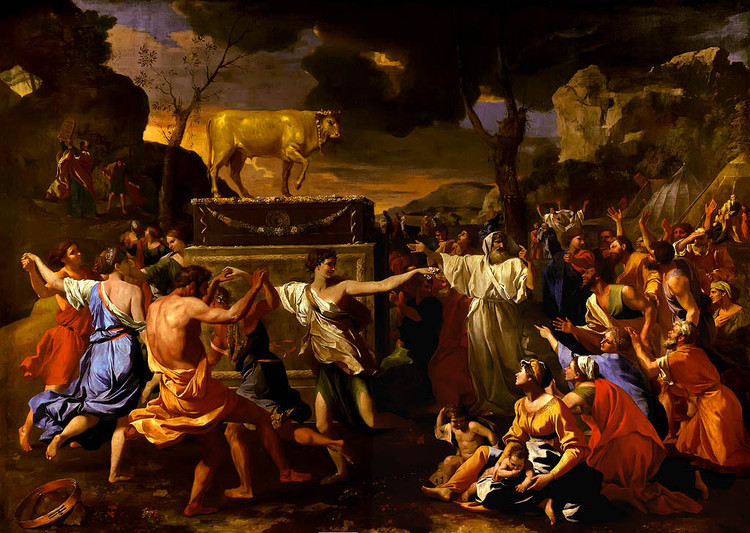
Moses plead with God to forgive the Israelites for making gods of gold. God sent a plague, as punishment.
Discussion points: What was the purpose of the blood sacrifices in Exodus 29? Why don’t Jews or Christians still sacrifice animals on an altar?
Psalms: Psalm 29:1-33:11
Proverbs: Proverbs 7:6-8:36
Themes and stories: Jesus tells about the future. Specifically, the destruction of the Temple, the end of the age, persecution, a great tribulation and the coming of the son of man. Jesus cautions that we do not know when he will return. Not even the angels in heaven know when he will return. (Hint: be ready for Jesus’ return ANY time—because you want to be prepared for that day.)
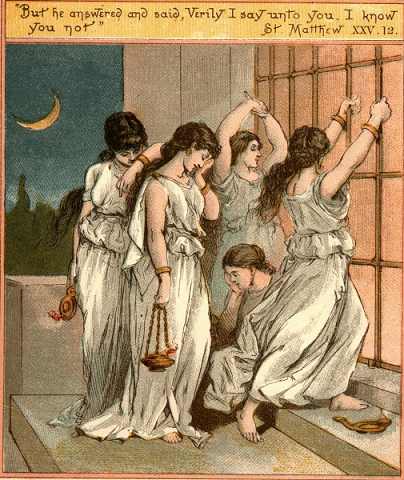
Jesus told another parable about loaned money (“the parable of the talents”). The servant who was loaned the most money invested it and made the greatest profit for his master. But the man who was lent a small amount was fearful and buried his money. He made NO profit. Upon his return, the master praised the servants who made him a profit. But he was angry with the man who made him no profit. The master cast this “servant into outer darkness: there shall be weeping and gnashing of teeth.”
Jesus tells about the final judgment. He also says that how we treat the least “important” people is how we are treating Him.
A woman anointed Jesus with some very expensive perfume. The disciples denounced the “waste.” Jesus responds that she is preparing him for his earthly death and burial. Judas betrays Jesus for thirty pieces of silver.
Jesus and the disciples ate their “last supper” together. They did not all sit on the same side of the table. Jesus said to them:
[26] Now as they were eating, Jesus took bread, and blessed, and broke it, and gave it to the disciples and said, “Take, eat; this is my body.” [27] And he took a cup, and when he had given thanks he gave it to them, saying, “Drink of it, all of you; [28] for this is my blood of the covenant, which is poured out for many for the forgiveness of sins. [29] I tell you I shall not drink again of this fruit of the vine until that day when I drink it new with you in my Father’s kingdom.”
Jesus predicts that Peter will deny him three times “before the cock crows.” Peter says he would die before he denies Jesus even once.
Jesus goes in the night to pray in the garden called Gethsemane. The disciples can’t stay awake for even a short period of time as Jesus goes off to pray. Judas brings the guards to arrest Jesus. Judas identified Jesus with a kiss. Be careful who you kiss. As the guards moved to arrest Jesus, one of the disciples drew a sword and whacked off the ear of the slave of the High Priest. Jesus disapproved of the sword play, but asked why they had come to arrest him under the cover of darkness. Jesus’ disciples all ran away.
Jesus was taken to the High Priest, Caiaphas. Jesus was accused of blasphemy. Meanwhile, Peter was sitting outside in the courtyard, of the place where Jesus was taken. Peter denied he was with Jesus. He denied Jesus three times before the cock crowed, just as Jesus has predicted.
In the morning the religious leaders condemned Jesus. They plotted Jesus’ execution. But as the religious leaders had no legal authority to execute Jesus, they sent him to the Roman Governor. Pontius Pilate.
Judas showed remorse and tried to give the thirty pieces of silver he’d earned by betraying Jesus, back to the religious leaders. Judas threw the money at the religious leaders, and went off to hang himself. They couldn’t put the money back into the treasury because it was blood money. Instead they used the silver to buy a “potter’s field” as a burial place for strangers.
Jesus was brought before Pontius Pilate to stand trial. Legal rights and rules of procedures were different in those days.
Discussion points: Both Judas and Peter denied Christ. How and why did the consequences of their sins differ so completely?
- Why did God institute the law “eye for eye, tooth for tooth, hand for hand, foot for foot, burn for burn, wound for wound, bruise for bruise;” and does this rule still apply to Christians today? (Exodus 21:24-25. See also, Matthew 5:38-48)
- Why was there a curtain inside the Tabernacle? (Exodus 26:31-33)
- Why would Judas want to betray Jesus? (Matthew 26:14-15)
The discussion notes ( PDF / TEXT ) for breakfast on Saturday, February 12, 2011 are now online — ”BLOOD”. Judas betrayed Jesus for 30 pieces of silver. Peter denied Jesus three times in one night. Why were the consequences of their sins so different? Discussion verses: Exodus 29:10-22 and Matthew 27:1-10